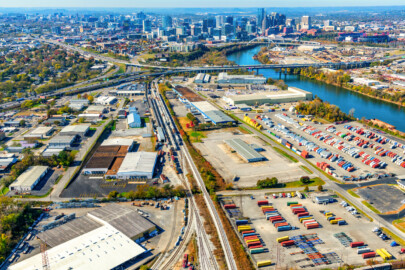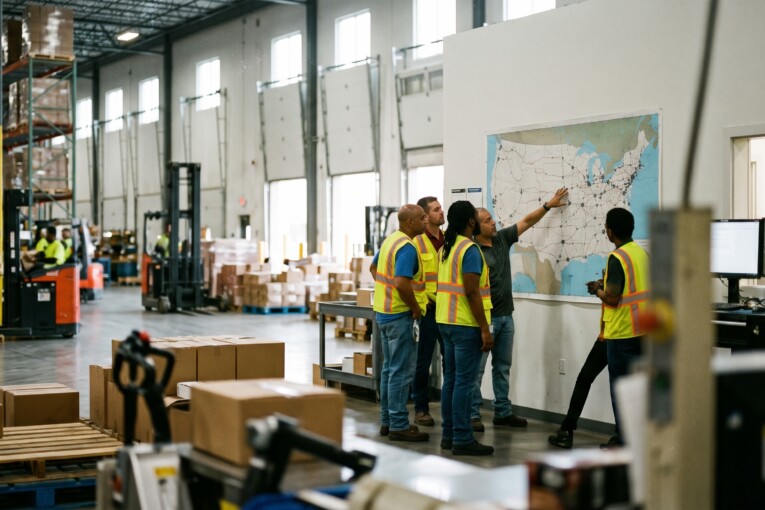


Your warehouse sits in one corner of the country, and half your customers live in the other. Every order that crosses the map pays for the trip in higher shipping zones and slower delivery. Multi-node fulfillment is the fix most brands reach for, but a second warehouse brings costs that rarely show up in the pitch.
Run the numbers in this order before you add a node:
- What you save: how shorter zones cut your parcel bill
- What goes up: the inventory and freight costs of a new building
- When it pays off: the order patterns that tip the math
- How to start small: splitting only the SKUs that earn it
Quick Answer
Multi-node fulfillment lowers your total cost of fulfillment when parcel savings from shorter shipping zones outweigh the new costs of splitting inventory. Those new costs include extra safety stock, inbound freight to each warehouse, and storage fees at every node. Brands with dense order clusters far from their current warehouse, and enough volume to keep each node stocked, are the most likely to come out ahead.
What Does Multi-Node Fulfillment Actually Save You?
Multi-node fulfillment saves money mainly on your parcel bill, because packages cross fewer shipping zones. Carriers price ground parcels by the distance from warehouse to customer. A box from New Jersey to Los Angeles lands in the highest ground zone, while the same box from Nevada lands far lower and arrives days sooner.
Speed brings its own savings. When ground reaches most customers in two or three days, you stop paying for air upgrades to keep a delivery promise. Our look at multi-region fulfillment strategy covers the speed side in more detail.
Hot Tip: Pull last quarter’s order ZIP codes and check them against the USPS Domestic Zone Chart. If most volume already ships in low zones, a second node won’t move the needle.

What Goes Up When You Split Inventory?
Common misconception: a second warehouse doubles your inventory. Your total sales stay the same, so cycle stock simply splits between two buildings. What does climb is safety stock, the buffer you hold against demand swings. Dr. Michael Watson explains in Supply Chain Digest: total safety stock grows with the square root of the number of warehouses. Two nodes need roughly 41% more safety stock, not 100% more.
That extra buffer still has a price. Inventory carrying costs typically run 20% to 30% of inventory value per year, according to inFlow Inventory. If you hold $200,000 in safety stock today, a second node adds roughly $83,000 more. At the low end of that range, that is about $16,600 a year to weigh against your parcel savings.
Other Costs That Come With a New Node
- Inbound freight: each node needs its own replenishment loads, often smaller and pricier per unit
- Storage and handling fees: slow movers can take up space in two buildings
- Split shipments: items stocked in different nodes may ship in two boxes
- Planning time: someone has to decide what stock goes where
Side by side, the trade looks like this.
| Cost | Single Node | Multi-Node |
|---|---|---|
| Parcel Shipping | High zones on distant orders | Lower average zone across the map |
| Expedited Upgrades | Often needed for distant customers | Ground reaches more customers quickly |
| Safety Stock | One pooled buffer | Roughly 41% more with two nodes |
| Inbound Freight | One replenishment lane | One lane per node |
| Storage Fees | Every SKU in one building | Slow movers in every building |
| Retail Freight | Long hauls to distant retailer DCs | Shorter runs from the nearest node |
When Does Multi-Node Fulfillment Pay Off?
Multi-node fulfillment pays off when a large share of your orders ships far from your current warehouse and you have the volume to keep a second node stocked. If a third of your volume lands in the highest zones, the parcel savings add up fast. If most customers already sit nearby, extra safety stock and inbound freight will likely eat the gain.
Weight matters too. Carrier rates climb faster per zone as packages get heavier, so heavier orders gain the most from a closer node.
Test your 3PL with a real situation. Your West Coast orders double next quarter. Which node restocks first, and how fast? Listen for who decides the allocation, how often each node gets replenished, and how transfer freight shows up on your invoice.
Multi-Node Fulfillment Without Splitting Every SKU
You do not have to stock every product in every building. Many brands place only their fastest sellers in a second node and keep the long tail in one place. Top sellers drive most parcel volume, so they capture most of the zone savings, while pooled slow movers keep safety stock and storage fees in check.
Hot Tip: Start a second node with your top 20% of SKUs by order volume. Review the split every quarter and move items in or out as sales shift.
Placement matters as much as SKU choice. Compare where your 3PL’s warehouses sit against your densest cluster of distant customers.
A customer orders two items stocked in different nodes. What happens? Listen for split-shipment rules and who pays for the second label.
Retail Orders Count Too
Retail orders change the math for brands selling to big-box and grocery accounts. Retailers receive pallets at regional distribution centers, so a node closer to those DCs means shorter freight runs and easier delivery windows. Count that freight in your model too.
Multi-node fulfillment can lower your costs or raise them. Lower parcel and freight costs sit on one side, more safety stock and moving parts on the other. Run the numbers on your own order data, start with the SKUs that earn a second home, and revisit the split as you grow.
If you’re a growing multi-channel brand weighing a second node, Symbia can talk it through with you. With five fulfillment locations and multichannel fulfillment built for DTC and retail orders, we help brands decide where their inventory should live. Reach out to start the conversation.
Frequently Asked Questions
How many fulfillment centers does a growing brand need?
The right number depends on where your orders cluster, and many growing brands do well with one or two. Start with one well-placed warehouse, then add a second when a large share of orders ships to distant zones and your volume can keep it stocked. Each added node brings smaller zone savings and more inventory to manage.
Does multi-node fulfillment increase inventory costs?
Yes, but usually by less than brands expect. Under the square root rule, total safety stock grows with the square root of the number of warehouses, so two nodes need roughly 41% more safety stock rather than double. Cycle stock splits between buildings instead of growing.
When should a brand add a second warehouse?
Add a second warehouse when parcel savings from lower zones clearly outweigh the added carrying cost, inbound freight, and storage fees. A strong early signal is a large, steady share of orders shipping to the highest zones from your current location. Model it with your own order data before signing anything.
Does multi-node fulfillment help with retail orders?
It can. Retailers receive pallets at regional distribution centers, so a node closer to those DCs shortens freight runs and transit time. Brands with growing B2B volume should include retail freight in their cost model, not just parcel shipping.