
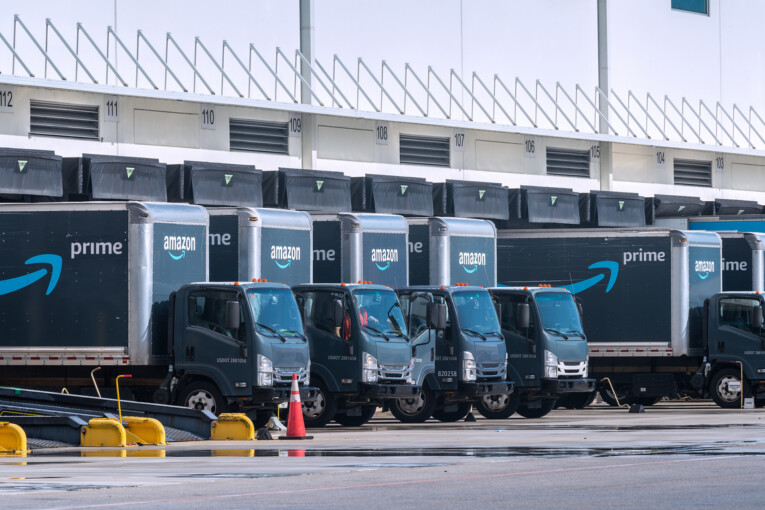


Major retailers, including Amazon and Walmart, are now selling logistics as a service. For many brands, big-box fulfillment offers considerable appeal. After all, using these logistics services helps ensure that you can scale your shipping needs quickly and easily—and it’s a fast solution for many of your logistics needs. Not only that, but using one of the big retailers can simplify the logistics process, since they take care of research and other key tasks for you.
Before you make that jump, however, it’s important to ask one essential question: Do these systems serve your brand, or theirs?
The Big-Box Fulfillment Boom
Walmart Fulfillment Services (WFS) and Amazon Multi-Channel Fulfillment (MCF) are very similar. Sellers send their products to the big brand’s fulfillment centers. There, the brand handles all the essentials of getting those items to customers: storage, picking, packing, and, of course, transporting those items to customers. These fulfillment solutions aren’t just for sellers who make their sales directly on those platforms. Instead, they allow brands to take care of all of their fulfillment from the major brands’ distribution centers. That means brands can offer fast, often free, shipping to their users while still keeping their own costs low.
These programs are part of a larger shift in logistics trends, including the increased desire for automation, omnichannel growth, and last-mile dominance. Increasingly, brands are looking for simple, straightforward solutions that make it easy for them to handle logistics operations and accomplish their goals—and using a big-box provider for their needs seems highly convenient.
The Real Cost of Convenience
Using Walmart or Amazon fulfillment services seems like an easy solution for those needs. However, that convenience brings with it a number of potential hidden costs and tradeoffs that you must take into account before making a decision about your fulfillment provider. That includes things like higher long-term fees, limited access to the data you need, and more. Partnering with an independent 3PL, on the other hand, can make it easier for you to accomplish your fulfillment goals—including convenience and simplicity—at a lower cost.
- Fees and surcharges: Both MCF and WFS have higher long-term fees and increased surcharges, which can mean a significant fulfillment cost increase. Independent 3PLs, on the other hand, may be significantly less expensive in the long run.
- Product prioritization: During peak periods, Amazon and Walmart will prioritize delivery of their own products. An independent 3PL will focus on making sure their clients’ packages get where they need to be.
- Data access: An independent 3PL will provide their clients with significantly more access to data and information, making it easier for them to forecast and predict future needs and costs.
- Branding and packaging: When Walmart or Amazon fulfills items, they are often shipped out with the retailer’s branding on the packaging. An independent 3PL, on the other hand, can offer packaging based on your unique branding and preferences.
Many brands find that using an independent 3PL allows them to provide a better experience for themselves and their customers.
Control, Compliance, and the Customer Experience
Retailer-run logistics can compromise your brand’s control over the customer experience. For example, big-box fulfillment may have labeling and packaging restrictions that interfere with the unboxing process, which can be critical, especially for brands that offer regular subscriptions or other products where unboxing is a key part of the overall experience. You lose control over the branded touchpoints in the customer experience.
Not only that, you can face unexpected challenges and fines, including OTIF (on time, in full) fines if your shipments don’t arrive when they should, with all necessary content. If you fail to comply with EDI requirements, you can face chargebacks. These costs can add up fast, especially when unexpected challenges arise along the way.

When the Hybrid Model Wins
For many brands, a hybrid model is the most effective strategy for growth and effective fulfillment. You can use WFS or MCF—or both—for specific marketplaces, especially overflow or areas where you may face challenges meeting fulfillment goals. For DTC fulfillment, bundling, and brand control, on the other hand, try working directly with a 3PL to see what they can offer. Build in flexibility to protect your margins and service levels.
Suppose, for example, that you offer a base product that can be most easily fulfilled by standard processes. It does not require branded shipping materials, and you do not have a specific unboxing experience in mind for your customers. Those products may be easily handled by Walmart or Amazon’s fulfillment processes. On the other hand, if you put together branded bundles or regular shipments, you may want to consider working with a 3PL to accomplish those more specific requirements.
The Smart Brand’s Playbook
Are you ready to make decisions about your fulfillment needs?
Step 1: Audit
Take a look at your current fulfillment mix and control points. Determine where your current mix may need additional support or work. Don’t forget to evaluate costs and convenience.
Step 2: Pilot
Test one program on limited SKUs. See whether Walmart or Amazon can deliver the experience you’re looking for, how it works, and whether you’re frustrated by any of the elements of that process.
Step 3: Evaluate
Track all elements of your pilot program. Consider delivery speed, how often items are returned, and overall customer satisfaction.
Step 4: Decide
Scale your current operations, switch them, or combine them. Download our calculator or check out our checklist to learn more about the options available and choose the right one for your needs.

Choose the Right Fulfillment Solution for Your Brand
Big box networks can deliver scale, but not always the service you need. While big-box fulfillment may be able to simplify your fulfillment efforts, you may find that they aren’t offering the service your customers really need or want—or the visibility you need. For brands that want fulfillment to feel like an extension of their business, not a transaction inside someone else’s empire, reach out to start the conversation and see what specialized care really looks like.